
How to Find a Trusted Babysitter in Washington, DC (Without Guessing)
You don't need a full-time nanny for a dinner reservation on Thursday. But you do need someone reliable, someone who shows up when they say they will, knows what to do if your toddler chokes, and isn't spending the evening on their phone. Finding a good babysitter in Washington, DC is a little more involved than downloading an app and scrolling profiles. Here's what actually matters, and what most families figure out only after a booking goes sideways.
Quick answer: A vetted sitter in DC typically runs $25 to $40 an hour depending on experience and number of kids. The difference between a trustworthy booking and a coin flip comes down to background checks, real references, and a documented vetting process. Apps give you speed. An agency gives you a paper trail.
Babysitting vs. a Nanny Placement
These aren't the same thing, and mixing them up leads to bad expectations on both sides. A nanny is a regular, ongoing hire with a schedule, a written contract, payroll, and usually a guaranteed hours arrangement. A babysitter covers specific, discrete shifts, Thursday evenings, occasional Saturdays, a school pickup when your partner travels.
If you need someone two nights a week and a Saturday here and there, you're looking for babysitting coverage, not a placement. The distinction matters practically. It affects what vetting you need, what the legal employment status looks like, and what happens if the arrangement doesn't work out.
A placement involves a search, interviews, a trial period, and paperwork. Babysitting coverage is about finding someone reliable you can call for shifts. Both are legitimate needs. Knowing which one you have before you start searching saves a lot of wasted time. If you're still working that out, choosing between childcare options in DC walks through how families here typically make that call.

What a Real Vetting Process Actually Covers
An app lets someone create a profile with a photo and a few sentences. That's the whole process on their end. No one called a former employer. No one ran a criminal background check. No one verified that the CPR certification is current and not from 2017. A real vetting process does something different.
At a minimum, it verifies identity, runs a background check covering criminal history and the sex offender registry, confirms CPR and first aid certification, and calls former families, actual calls, not just names listed on a form. District Sitter uses a 7-step process before any sitter gets in front of a family.
That's not a marketing number. It's what separates a sitter who can handle a 2-year-old throwing a tantrum from one who freezes. Most DC parents don't have the time or institutional access to verify any of that themselves. That's the real reason to use an on-call babysitting service instead of a listing platform, you're not paying for convenience, you're paying for accountability.
Evening and Weekend Availability in DC
DC evenings are not low-demand. Hill staffers, consultants, embassy families, government contractors catching early Monday flights, the childcare pool gets thin fast on Friday nights and around holiday weekends. The sitters who are always available at 6pm on a Friday tend to be newer, less experienced, or have a lighter booking calendar for a reason worth asking about.
This isn't a reason to panic. It's a reason to plan ahead. Book 48 hours out when you can. For recurring needs, a weekly date night, a Thursday evening standing schedule, lock someone in and treat it like any other recurring commitment. Last-minute coverage works sometimes. It shouldn't be your default, especially for infants or kids with specific needs.
Book at least 48 hours in advance for weeknight coverage
For recurring weekly needs, set a standing schedule early in the relationship
Holiday weekends and embassy event seasons fill up fastest in DC
Confirm coverage at least 24 hours before, not 20 minutes before drop-off
How to Prep for a First-Time Sitter
Write it down. Feeding schedule, bedtime routine, allergies, the lock on the back gate, what the dog does when she gets anxious, whether the older kid has a specific way they like their pillow arranged. A sitter can't read your mind, and asking them to figure it out on the spot is a recipe for a stressful evening for everyone.
The families with the smoothest first visits send a short typed sheet before the booking, nothing fancy, just four or five paragraphs covering the basics. It cuts the call-you-in-the-middle-of-dinner rate down significantly. Include your pediatrician's number, a second emergency contact, and any medication instructions in writing. Don't assume the sitter will ask the right questions. Write down what matters and hand it over when they arrive.

Age Ranges and What Actually Changes
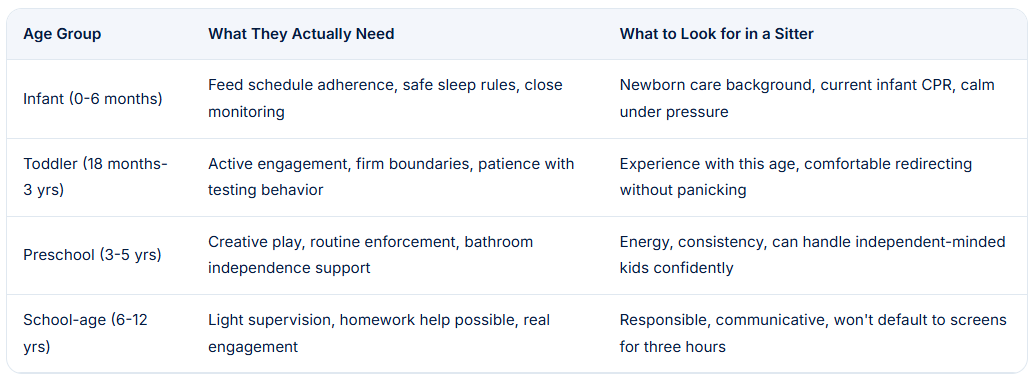
A sitter who's great with a 9-year-old might not be right for twins under 2. Infant care is a genuinely different job, most experienced sitters in DC won't take solo infant care under 6 months without a specific newborn background or current infant CPR training.
Toddlers are active, loud, and will test every limit they can find. School-age kids are easier logistically but still need real engagement, not three hours of screens. When you book, be specific about ages and anything relevant, a recent diagnosis, a transition at home, a picky eater, a kid who's scared of strangers.
When Babysitting Turns Into Something More Permanent
A lot of full-time nanny placements start exactly this way. Family hires a sitter for Tuesday evenings. It works well. The kids bond with her. Schedule expands to include Thursday and Saturday. Six months later, they're talking about a nanny contract. That's fine, but the shift changes things legally.
Once you're at regular, recurring weekly hours, you're in household employee territory. That means W-2, federal and state withholding, FICA. Paying cash to avoid the paperwork sounds simpler until you're sitting in an unemployment claim or an IRS audit wondering what your sitter reported.
Run it clean from the start. If you're heading toward something more permanent, looking into a DC nanny placement service gets you proper contract paperwork and the compliance piece handled correctly, which saves real money and real headaches down the road.
DC moves fast and schedules shift without warning. Having a babysitter you can actually call, someone vetted, referenced, and clear on how your household runs, makes the difference between a good evening out and a stressful scramble. The setup takes a little time the first time. After that, it's easy.